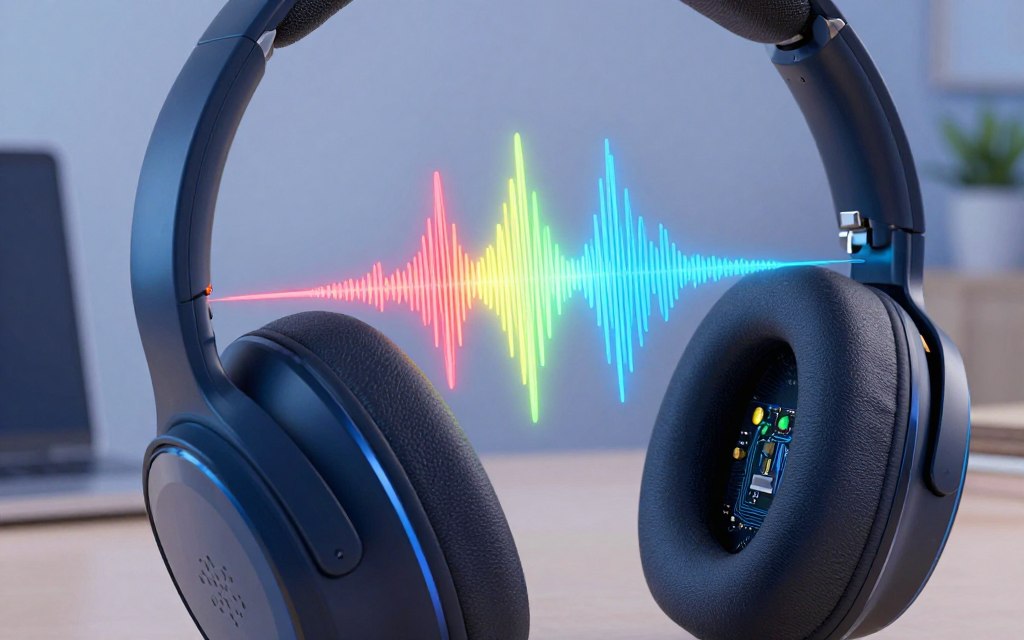

Many people ask, “how does noise canceling technology work?” These devices make daily life quieter with microphones, signal-processing hardware, speakers, and special ear cups or tips.
Noise-canceling technology uses two sound-reduction methods: passive noise isolation and active noise cancellation. Passive isolation blocks sound physically, while active noise cancellation creates an opposing wave. ANC headphones use destructive interference to reduce incoming noise.
Phase inversion, real-time processing, and adaptive algorithms help this system respond to changing sound environments. Noise cancellation works best against steady, low-frequency sounds, including airplane engines and air-conditioning systems. These devices cannot create absolute silence or remove every sudden sound.
Key Takeaways
- Noise-canceling devices combine various technologies to reduce unwanted sound.
- Active noise cancellation generates opposing sound waves to minimize noise.
- Passive noise isolation physically blocks sound from entering.
- Destructive interference is a key principle in noise cancellation.
- This technology is most effective against steady, low-frequency sounds.
- Noise cancellation does not provide complete silence.
The Fundamentals of Sound and Noise
Learning about sound and noise helps explain how noise-canceling technology works. Sound waves are mechanical waves created when objects vibrate, sending energy through air, water, or solid materials. These vibrations create pressure changes that travel outward until they reach our ears or a microphone.
Unwanted noise is sound that disrupts or bothers people. However, a sound can be noise in one place and useful in another. The sound of a baby crying may disturb a quiet café but remains essential in a parental setting.
What Is Sound and How Does It Travel?
Sound waves move through different materials as their particles vibrate. This energy transfer explains how sound travels quickly and efficiently. In air, sound travels approximately 343 meters per second, though temperature and pressure can change its speed.
Defining Noise: Unwanted Sound in Everyday Environments
Noise can disrupt communication and concentration. Not every sound is unwanted noise; context helps define it. Music may be enjoyable in one setting but disruptive in another.
Frequency, Amplitude, and the Decibel Scale
Frequency and amplitude describe different sound features. Frequency is the number of pressure cycles per second, measured in hertz (Hz). Low frequencies make deep rumbles, while high frequencies create sharper tones.
Amplitude measures wave strength and relates to how loud a sound seems.
The decibel scale uses logarithms to describe sound pressure levels. Small decibel increases show large changes in acoustic energy. These ideas help explain why active noise cancellation (ANC) works better against some sound patterns than others.
| Characteristic | Description | Example |
|---|---|---|
| Frequency | Number of cycles per second | 440 Hz (A note) |
| Amplitude | Strength of the sound wave | Soft whisper vs. loud shout |
| Decibel Level | Measurement of sound intensity | 60 dB (normal conversation) |
2. A Brief History of Noise-Canceling Technology
The history of noise cancellation shows steady scientific progress. Early noise reduction research focused on physical barriers and acoustic enclosures. These methods used insulation and absorption to limit unwanted sound, improve comfort, and support communication.
Researchers developed a way to oppose unwanted sound waves with an electronic signal. This idea formed the basis of active noise control and later became practical. Microphones, electronic circuits, and speakers became key parts of active noise cancellation (ANC) systems.
Aviation and aerospace research helped advance these technologies. Aircraft engine noise created serious challenges for passengers and crew. This need drove sophisticated ANC systems that later reached consumer products.
Today, modern ANC technology uses miniaturized processors, efficient batteries, and improved microphones. Adaptive algorithms changed ANC from a specialized engineering solution into a common feature in consumer headphones and earbuds. This progress shows how noise-canceling technology became part of daily life.
3. Passive Noise Cancellation Explained
Passive noise cancellation, also called passive noise isolation, reduces unwanted sound without electronic signals. It uses physical barriers and materials to block, absorb, or soften incoming noise. Learning how passive noise isolation works helps you choose headphones or audio devices for your needs.
3.1 Physical Barriers and Sound Isolation Techniques
Passive noise cancellation often uses physical barriers to stop sound waves from reaching the ear. Over-ear headphones use sealed ear cups and soft cushions to fit tightly around the ears. This ear cup design blocks outside noise and improves comfort during long use.
In-ear headphones use ear tips that fit snugly inside the ear canal. This close seal supports effective passive noise isolation by limiting gaps where sound can pass. Both designs reduce outside noise and create a more immersive listening experience.
3.2 Materials Used in Passive Noise Blocking
Headphone effectiveness depends largely on construction materials. Common soundproof materials include:
- Dense Plastics: Often used in ear cup designs to create a solid barrier against sound.
- Foam: Provides cushioning while also absorbing sound waves.
- Silicone and Rubber: These materials help create a tight seal in in-ear designs.
- Leather or Synthetic Leather: Commonly used for ear cushions to enhance comfort and isolation.
- Specialized Acoustic Fabrics: Designed to improve sound absorption and reduce reflections.
A strong seal matters because gaps let sound bypass the barrier, especially at higher frequencies. Careful ear cup design and padding thickness can greatly improve passive noise isolation and acoustic insulation.
3.3 Limitations of Passive Noise Reduction Methods
Passive noise cancellation works well, but it has limits. Some methods add bulk, making headphones less portable, while materials may press on ears during long use.
Passive noise isolation also struggles with low-frequency vibrations traveling through surfaces or the body. Thus, passive isolation helps, especially with active noise cancellation (ANC), but cannot remove every unwanted sound.
Despite these challenges, passive noise isolation remains essential in many audio devices. It reduces electronic system workload, supporting a more efficient noise-canceling experience.
| Material | Function | Benefits |
|---|---|---|
| Dense Plastics | Sound barrier | Durable and effective at blocking sound |
| Foam | Sound absorption | Comfortable and reduces sound reflections |
| Silicone | Seal | Provides a snug fit for in-ear headphones |
| Leather | Cushioning | Enhances comfort and isolation |
| Acoustic Fabrics | Sound absorption | Improves overall sound quality |
For more insights on choosing the right noise-isolating headphones, check out this comprehensive guide.
4. How Does Noise-Canceling Technology Work: The Core Principles
Noise-canceling technology combines sound waves with advanced algorithms. It mainly uses Active Noise Cancellation (ANC), a process that reduces unwanted ambient sounds. Learning how active noise cancellation works helps explain why these devices work well.
Active Noise Cancellation (ANC) Fundamentals
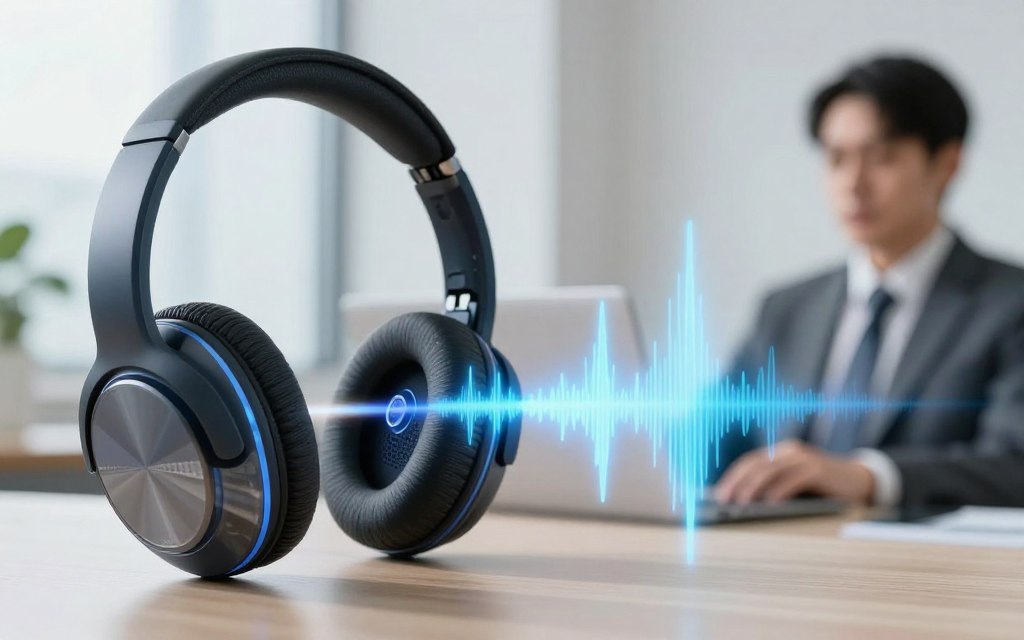
Microphones detect sounds outside the device. Then, the system captures and studies each noise waveform. This analysis reveals the noise’s features, so the processor creates an anti-noise signal, an inverted version of that wave.
The Science of Destructive Interference
The key idea behind ANC is destructive interference. When similar sound waves meet in opposite phases, they can partly cancel each other. The anti-noise signal is not a universal “silencing” sound; it targets the unwanted sound reaching the device.
Real-Time Sound Wave Analysis and Processing
Timing matters in noise cancellation. Even a slight processing delay can weaken cancellation against steady noises, such as airplane cabin rumble or bus vibrations. It continuously uses real-time audio processing to monitor the environment and adjust the anti-noise signal for the best performance.
Adaptive noise cancellation systems respond to changing conditions. For example, they adjust to different background-noise levels, making them useful in many environments. Yet sudden sounds, such as voices, clattering dishes, or keyboard clicks, may only be partly reduced.
5. The Role of Phase Inversion in Active Noise Cancellation
Understanding noise-canceling devices helps explain how they create quieter listening. These devices use advanced technology to reduce unwanted sound. Phase inversion is a key idea behind this process.
Understanding Phase and Waveform Alignment
Phase describes a sound wave’s position within its repeating cycle. When two waves meet, their phase relationship decides whether they amplify or cancel each other.
For example, one wave’s crest can meet another wave’s trough and reduce the overall sound. This principle supports noise cancellation, where proper waveform alignment is essential.
How Anti-Noise Signals Are Generated
Noise-canceling headphones generate an anti-noise signal to counter unwanted sounds. The system’s processor detects incoming sound waves and creates an inverse waveform. This waveform becomes a noise-canceling signal that opposes the detected noise.
The system fine-tunes this signal to match the ear cup and listener’s ear acoustics. This calibration adjusts the signal as sound travels through the device, rather than using a simple mirror image.
Microphone Placement and Signal Processing
Microphone placement is critical in noise-canceling technology. Noise-canceling systems use two main microphone types: external and internal. External microphones capture ambient sounds before they reach the ear; this method is called feedforward ANC.
Internal microphones measure sound inside the ear cup or ear canal; this method is called feedback ANC. Hybrid systems combine both approaches and provide greater control over noise cancellation.
Accurate microphone placement helps the system monitor sound and adjust dynamically. Calibration, digital filtering, and feedback control prevent overcorrection and instability, supporting a seamless listening experience.
| Microphone Type | Function | Advantages |
|---|---|---|
| External Microphone | Captures ambient noise before it reaches the ear | Effective for detecting surrounding sounds |
| Internal Microphone | Measures sound inside the ear cup | Provides feedback for real-time adjustments |
| Hybrid System | Combines both external and internal microphones | Offers comprehensive noise cancellation |
6. Components Inside Noise-Canceling Headphones and Devices
Understanding ANC headphone components helps explain this advanced technology. Each part supports an effective active noise cancellation (ANC) experience.
Microphones and Sound Capture Systems
Noise-canceling microphones capture sounds outside the headphones. They support several important tasks, including:
- Monitoring ambient noise to generate anti-noise signals.
- Facilitating voice calls by picking up the user’s voice clearly.
- Enabling transparency modes, allowing users to hear their surroundings.
This flexibility delivers high-quality audio while helping users hear their surroundings when needed.
Digital Signal Processors (DSP) and Algorithms
The digital signal processor controls many functions in noise-canceling headphones. It studies incoming signals and creates anti-noise against unwanted sounds. The DSP also manages:
- Equalization for optimal sound quality.
- Switching between listening modes, such as ANC and ambient sound.
Advanced algorithms consider fit, leakage, and changing environments. They create a listening experience suited to each user.
Speakers, Drivers, and Audio Output
Headphone drivers reproduce sound accurately. They deliver both the desired audio content and calculated anti-noise signals effectively. Dynamic and balanced armature drivers differ, but both provide clear, immersive sound.
Power Requirements and Battery Considerations
Power use is critical to ANC technology. Microphones, DSPs, and wireless connections all need energy. Key considerations include:
- Battery capacity and its impact on ANC battery life.
- Charging systems and their convenience for users.
- Power-saving features that extend usage time.
These components help users understand design choices affecting sound quality, weight, cost, reliability, and overall performance.
7. Applications Beyond Headphones: Where ANC Is Used
ANC applications reach far beyond consumer headphones and support many industries. This technology improves comfort and communication where noise causes major distractions.
7.1 Aviation and Aerospace Industry Applications
Aviation noise reduction with ANC lowers steady engine and cabin noise. It helps passengers and crew speak more comfortably while reducing listening fatigue. In aerospace, noise-control systems support headsets and communication equipment for clear speech in noisy settings.
7.2 Automotive Cabin Noise Reduction Systems
Automakers increasingly use ANC to improve the driving experience. Cabin microphones and vehicle data counter road rumble, tire noise, and engine vibrations. Automotive noise cancellation uses the vehicle’s existing audio system and adapts to driving conditions for a quieter, more enjoyable ride.
7.3 Industrial, Workplace, and Medical Environments
Industrial noise control reduces noise from machinery and ventilation systems. It improves worker communication and supports a safer workplace. Medical noise reduction lowers equipment noise, improves speech clarity, and supports critical communication; high-stakes systems need safety validation.
8. Limitations and Challenges of Noise-Canceling Technology
Noise-canceling devices offer advanced features, but they still have clear limits. ANC limitations matter when choosing this technology. Active noise cancellation works best on steady, low-frequency sounds, but high-frequency noise reduction remains limited.
Effectiveness Against Sudden or High-Frequency Sounds
ANC reduces steady noise, such as an airplane engine’s hum. However, it works less well against sudden sounds, including claps or alarms. These noises can reach your ears before the system analyzes and counters them, which may frustrate users seeking complete silence.
Battery Dependency, Device Weight, and Comfort Issues
Many battery-dependent headphones use noise-canceling technology, which can interrupt long listening sessions. Their weight can reduce noise-canceling comfort during long listening sessions. Hair, glasses, and movement can create acoustic leaks, reducing passive isolation and ANC.
Cost Considerations and Accessibility Barriers
Price also matters. High-quality ANC headphones often cost more, which can limit access for some consumers. Basic models may lack advanced features, so compare price, performance, and comfort before choosing a device.
| Feature | High-End Models | Mid-Range Models | Budget Models |
|---|---|---|---|
| Noise Cancellation Quality | Excellent | Good | Fair |
| Battery Life | 20+ hours | 15-20 hours | 10-15 hours |
| Comfort | High | Moderate | Variable |
| Price Range | $300+ | $150-$300 | Under $150 |
Noise-canceling technology offers major benefits, but set realistic expectations. These devices cannot replace certified hearing protection in noisy environments. Consider your needs and ANC limitations before making a purchase.
9. Choosing the Right Noise-Canceling Device for Your Needs
Choosing a noise-canceling device can improve your listening experience. Different designs and features suit different needs. This guide helps you match your audio preferences and lifestyle.
9.1 Over-Ear vs. In-Ear vs. Earbud Designs
When comparing noise-canceling headphones, consider their design. Over-ear ANC headphones use larger drivers for rich sound and comfort during long listening sessions. Their shape also blocks outside noise well.
Noise-canceling earbuds offer a portable option for commuters and travelers. In contrast, in-ear and earbud designs are light and easy to carry. Their performance depends largely on ear-tip fit, which supports effective noise cancellation.
9.2 Key Features to Compare Before Buying
Before buying, compare these important features:
- ANC Strength: Evaluate how well the device cancels noise.
- Transparency Mode: This feature allows you to hear your surroundings when needed.
- Microphone Quality: Important for calls and voice commands.
- Comfort and Fit: Ensure the device feels good during extended use.
- Battery Life: Longer battery life is crucial for travel.
- Water Resistance: Essential for outdoor use.
9.3 Popular Models Worth Considering
These popular models are worth considering:
| Model | Type | Key Features | Price Range |
|---|---|---|---|
| Sony WH-1000XM5 | Over-Ear | Exceptional ANC, long battery life | $350 – $400 |
| Bose QuietComfort Ultra | Over-Ear | Comfortable fit, great sound quality | $300 – $350 |
| Apple AirPods Max | Over-Ear | Seamless Apple ecosystem integration | $500 – $550 |
The best noise-canceling headphones should fit securely and meet your needs. Frequent flyers may want low-frequency cabin-noise reduction, while commuters may prefer compact earbuds. Choose the option that suits your routine.
10. Conclusion
Noise-canceling technology helps create a quiet listening environment. It combines passive sound isolation with active noise cancellation (ANC) to reduce unwanted sounds.
ANC explained: microphones capture ambient noise, while a digital signal processor analyzes it. This process lets speakers create an anti-noise signal that cancels the original sound through destructive interference.
Phase alignment, microphone placement, and processing speed influence ANC effectiveness. This technology reduces steady, low-frequency noises from aircraft, vehicles, and HVAC systems. However, sudden or high-frequency sounds are harder to suppress.
When choosing ANC headphones, consider fit, comfort, and intended use. Transparency features can improve safety in certain environments, while battery life and budget also matter. Remember, ANC does not create complete silence.
ANC is a sophisticated blend of acoustics and electronics that enhances your listening experience. Understanding the benefits of noise cancellation helps you make informed choices.
For travel peace or busy-workspace focus, the right ANC device can significantly improve audio experiences.


 By
By