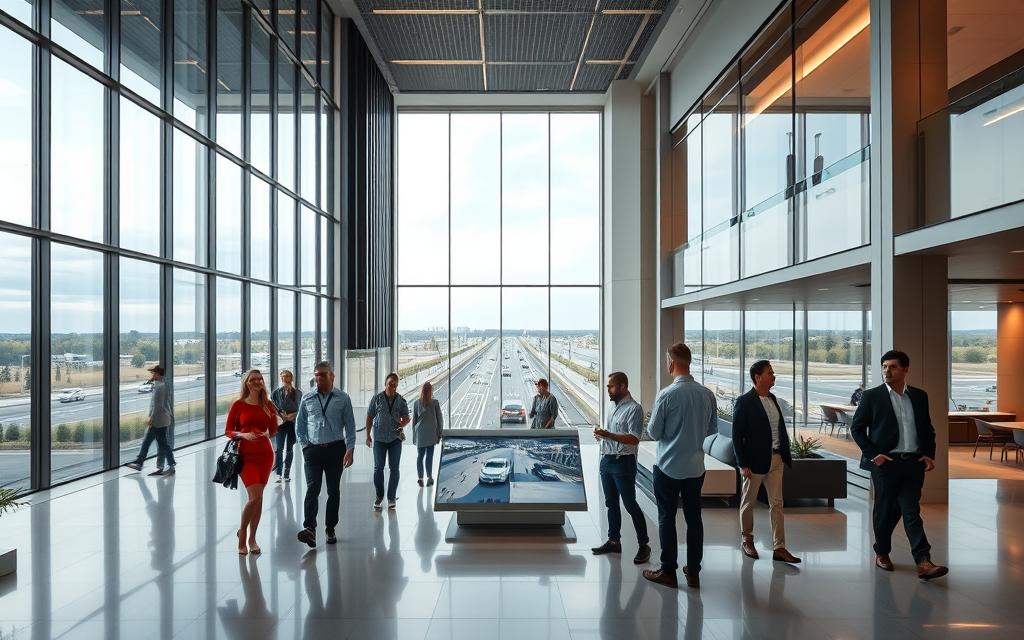

What is luminar technology and who stands behind it? Luminar Technologies (Nasdaq: LAZR) is a public American company founded in 2012 by Austin Russell and Jason Eichenholz, with headquarters in Orlando and a major hub in Palo Alto.
The firm develops automotive-grade LiDAR and machine perception to give cars long‑range, reliable distance sensing. Its mission is bold: eradicate vehicle accidents and save lives over the next century.
This Ultimate Guide will map the company’s rise from an Austin Russell start‑up to a 2020 SPAC listing and a 2025 leadership change to Paul Ricci. It will cover product lines, partner programmes, market cap context and why regulators and automakers watch each new release.
Expect clear, practical coverage of how a single roofline sensor helps a car or vehicle view the road, typical sensor pricing, and why this approach differs from vision‑only systems. The guide is aimed at professionals and enthusiasts seeking an up‑to‑date, reliable view of the company and its role in safer, smarter vehicles around the world. Anyone researching luminar company powering may also want to understand buy o2t before deciding on the best option.
Autonomous driving at the present: why LiDAR matters for safety and highway autonomy
Vehicles moving at speed need reliable three‑dimensional perception to make safe decisions.
Today’s ADAS features — lane keeping, adaptive cruise and automatic emergency braking — are maturing into hands‑off highway autonomy. LiDAR provides consistent 3D detection that complements camera and radar systems. This extra depth detail helps systems make faster, clearer choices for cars and larger vehicles on motorways.
The safety case is stark. Industry testing cited by the company shows camera/radar‑only stacks struggled in a large share of pedestrian AEB scenarios, with collisions reported in around 70% of those cases. Robust distance measurement and reliable object detection are essential before true safety autonomy can be declared.
Where LiDAR fits:
- From L2 driver aid to L2+ with extended driver support.
- Into L3 hands‑off operation, where dependable 3D context reduces edge‑case risk.
- As active sensing that keeps performance steady across light and many weather conditions.
Using 1550 nm light allows higher safe power and better Range × Resolution than 905 nm approaches. That range and clarity feed autonomy software with high‑quality point clouds, letting planners act sooner and cut collision probability worldwide.
Market momentum supports this shift: Frost & Sullivan estimate TAM near 197 million ADAS units by 2030. The press and regulators increasingly view LiDAR as core to next‑generation releases, while the company pursues series deployments that enhance drivers today and unlock L3 capability tomorrow.
What is Luminar Technology?
Long‑range laser returns create true 3D scenes that underpin safe highway autonomy for passenger cars.
Definition: light detection and ranging for vehicles
luminar technology refers to automotive light detection ranging that uses active laser emission and time‑of‑flight returns to build centimetre‑level 3D point clouds.
These point clouds power perception and planning for self‑driving cars by supplying exact distance, reflectivity and shape data.
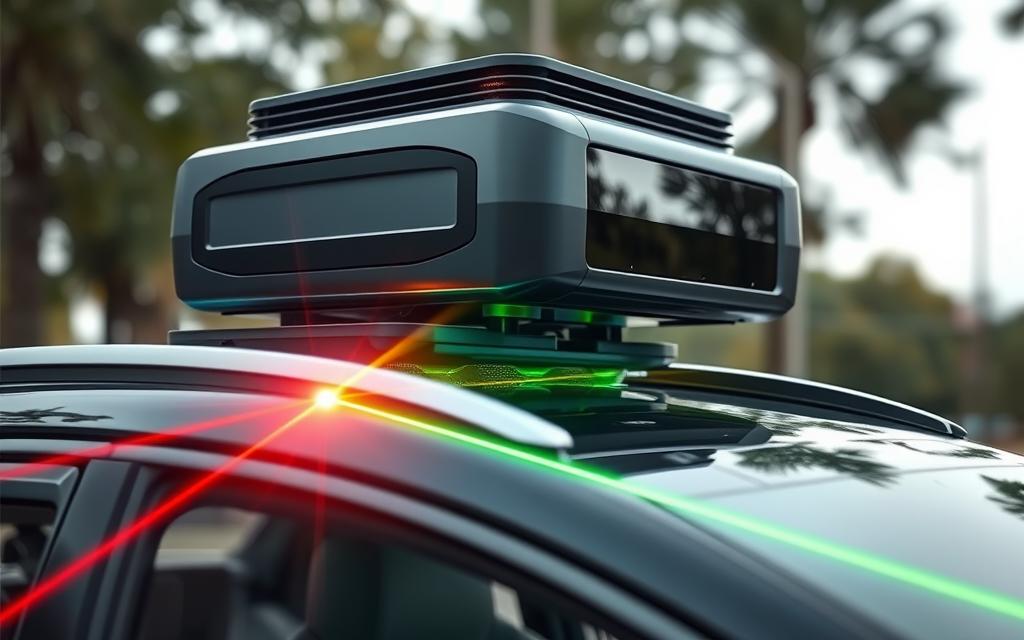
How 1,550 nm LiDAR works versus 905 nm, cameras and RADAR
Operating at 1,550 nm lets the system emit more photons while remaining eye safe, giving a larger photon budget and better Range × Resolution than 905 nm approaches.
Cameras infer depth from images and struggle in glare or low light. RADAR measures velocity well but lacks fine contouring. lidar supplies direct range and reflectivity to anchor multi‑sensor fusion.
Range, resolution and perception
Architecturally, a single laser with high‑speed raster scanning and InGaAs receivers creates dense point clouds. Iris detects dark objects near 250 m and bright objects to ~600 m.
Hydra offers ~250 m effective range with a 120° × 30° FoV. High point density and configurable vertical FoV improve classification, tracking and prediction.
- Automotive‑grade sensors fit rooflines or headers and cost in the hundreds of dollars.
- Centimetre‑level maps give earlier warning at motorway speeds and expand operational design domains for cars.
From stealth to series production: Luminar’s journey
A deliberate shift from stealth R&D to OEM supply defined the company’s rise from garage labs to car rooflines.
2012–2017: Founded by austin russell with Jason Eichenholz as CTO, the early years focused on in‑house sensor architecture.
The team picked 1550 nm and rebuilt components from the chip level to unlock long‑range performance suitable for production cars.
2017–2019: A $36m Series A funded Orlando manufacturing and test fleets. Toyota Research Institute deployed test vehicles and Volvo invested, helping reach a 250 m range with a smaller form factor.
2020–present: The 2020 SPAC release listed the firm as LAZR and drove market cap attention. Commercial wins followed: Daimler Trucks took a stake, Mobileye selected the company as a supplier, and SAIC adopted programmes for production.
Sentinel emerged via collaboration with Zenseact to pair hardware and software into an OEM‑grade safety and highway autonomy stack, designed for OTA updates and integration into real cars.
Global expansion included scale‑up in Orlando, a Shanghai office for Asia programmes, and aviation trials with Airbus UpNext.
Acquisitions and supply chain strengthened vertical integration: Black Forest Engineering, OptoGration, Freedom Photonics, Civil Maps, Seagate’s LiDAR assets and EM4 built a tighter production pipeline.
Governance evolved as well: leadership changes culminated in Paul Ricci becoming CEO in 2025, a move framed in press and press release coverage as a shift toward operational discipline while keeping strategic continuity.
| Period | Key event | Impact | Notable partners |
|---|---|---|---|
| 2012–2017 | Stealth R&D; 1550 nm architecture | Chip‑level control; long‑range readiness | Founders; Black Forest Engineering |
| 2017–2019 | $36m Series A; Toyota & Volvo deals | Manufacturing start; 250 m breakthrough | Toyota TRI; Volvo |
| 2020–present | SPAC listing; commercial scale | Market cap milestones; OEM programmes | Daimler Trucks; Mobileye; SAIC |
| Acquisitions & growth | OptoGration, Freedom Photonics, Civil Maps, EM4 | Vertical integration; production resilience | Various suppliers; Airbus UpNext |
Product portfolio powering safety and autonomy
A compact family of sensors and a matched software stack deliver OEM‑grade perception for production vehicles.
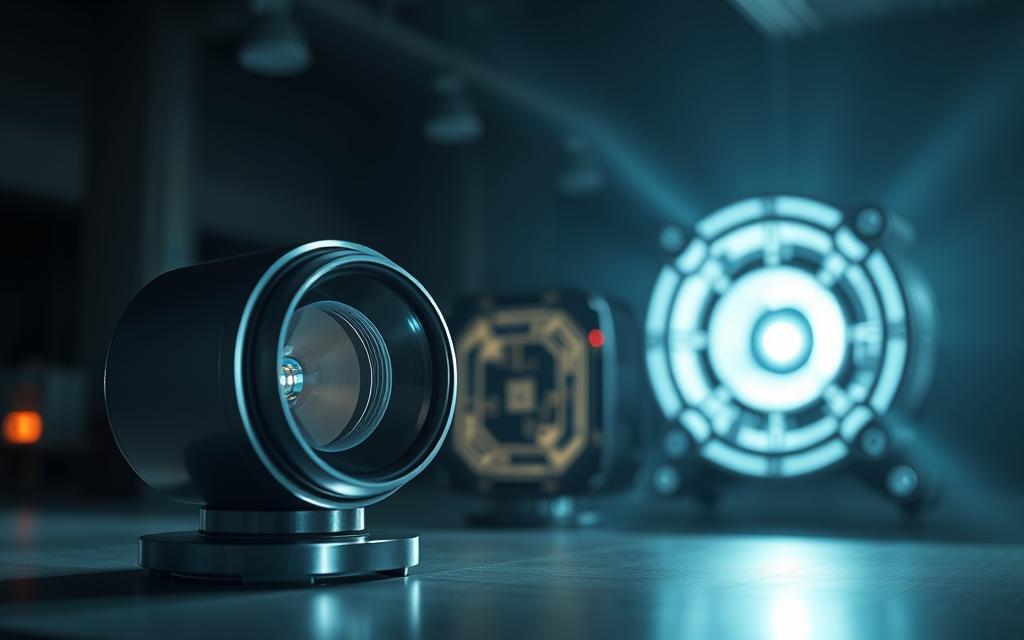
Iris family
Iris is the first automotive‑qualified luminar lidar designed for series production. Low‑volume SOP began in 2022; high‑volume SOP followed in 2024 for the Volvo EX90. The sensor offers a 120° horizontal FoV and long‑range detection suited to production vehicles.
Iris detects dark targets at about 250 meters and bright objects to ~600 meters. Its configurable vertical FoV and high point density support reliable classification and perception on motorways.
Iris+
Iris+ refines the design for tighter packaging. Expect roughly a 3× performance uplift and a 20% slimmer profile to aid integration into EV rooflines and header modules without losing thermal or optical performance.
Luminar Halo and Hydra
Halo targets mainstream adoption with ~4× performance, 3× smaller size and >2× cost improvement to speed fitment across cars.
Hydra serves L3–L4 programmes. It delivers a 250 meters effective range, 120°×30° FoV, 10 Hz and 64 lines at 1550 nm for advanced interlacing and adaptive scanning.
Sentinel and key specs
Sentinel is a full‑stack software platform co‑developed with Zenseact to enable Proactive Safety and Highway Autonomy. It combines core sensor software, perception, mapping and driving functions with OTA updates.
- Architecture: single‑laser raster scanning, InGaAs receivers, custom ASICs.
- Key capabilities: long range, high point density and OEM‑ready systems for production cars.
Vertical integration: Luminar Semiconductor and the chip‑level‑up strategy
Building core components in‑house gives clear advantages when moving from prototypes to series production.
Luminar Semiconductor unites several acquisitions to secure receivers, APDs, semiconductor lasers and photonics packaging. This chip‑level‑up approach ties optical subsystems, ASICs and manufacturing under one roof to speed iteration and raise yields.
Black Forest Engineering and OptoGration: receivers and APDs in‑house
Black Forest Engineering and OptoGration supply InGaAs receiver design and APD know‑how. Bringing these teams into the group tightens control over sensitivity, noise and timing.
That control directly improves long‑range lidar performance in harsh automotive environments.
Freedom Photonics and EM4: high‑performance lasers and photonics packaging
Freedom Photonics and EM4 contribute high‑brightness semiconductor lasers and robust packaging. Better thermal handling and optical power management aid manufacturability for automotive sensors.
Why integration matters: cost, reliability, supply chain and production scaling
Vertical integration reduces bill of materials and fewer supplier dependencies cut risk during ramps to production.
Co‑design of ASICs, receivers and lasers shortens qualification cycles and helps meet strict automotive safety and lifetime standards.
| Capability | Subsidiary | Benefit |
|---|---|---|
| InGaAs receivers & APDs | Black Forest Engineering / OptoGration | Improved sensitivity, lower noise, better timing for long‑range lidar |
| Semiconductor lasers | Freedom Photonics | Higher brightness, efficiency and optical power handling |
| Photonics packaging | EM4 | Automotive‑grade robustness and thermal performance |
| System co‑design | Luminar Semiconductor | Faster iteration, better yields and stable unit economics for production |
Strategic rationale: owning core components helps the company stabilise costs, accelerate releases and present OEMs with dependable sensors and systems. The result is a stronger moat around lidar performance and a clearer path to high‑volume production.
Market position, partnerships and competition
OEM commitments — from luxury marques to commercial fleets — signal a shift from pilots to volume fitment for advanced sensors.
Automaker wins and programmes
Major programmes anchor the market view. Volvo ships the EX90 with the sensor as a standard fitment.
Mercedes‑Benz plans future model integration and SAIC’s R brand has adopted the stack for China programmes. Nissan targets advanced autonomy by 2030.
Mobileye selected the sensor family for its autonomous vehicles, and Daimler Trucks holds a strategic minority stake that links commercial vehicle deployments.
Production and pricing
Historic pricing sat near $500–$1,000 per unit in April 2023. The drive now is to bend cost curves via scale, vertical integration and next‑generation parts.
This shift makes the business case stronger for passenger cars and for fleets that operate at highway speeds where range and reaction time matter.
Competitive landscape
The competitive field blends AV players and LiDAR specialists. Companies like Waymo operate at the system level, while peers such as Aeva, AEye, Cepton, Innoviz, MicroVision, Ouster, Valeo and Velodyne compete on architecture, wavelength and pricing.
| Category | Examples | Buying focus |
|---|---|---|
| AV systems | Waymo | Integration, safety validation |
| LiDAR peers | Aeva, AEye, Cepton, Innoviz | Range, resolution, cost |
| Tier and OEM | Valeo, Velodyne, MicroVision | Packaging, supply stability |
Safety autonomy at scale
Regulators and the press now look for sustained performance and functional safety evidence before approving series claims.
Press release cadence, test data and software updates that improve perception over time are central to buyer confidence.
“Buyers now weigh delivery credibility and safety validation more heavily than raw specs.”
In short, the market is consolidating around proven execution. Buyers favour partners who can supply sensors, software and systems while demonstrating repeatable releases and regional support.
Conclusion
Conclusion
Turning autonomous promise into everyday safety relies on production sensors, validated software and OEM launches that consumers and regulators can trust.
The company’s century plan aims to save 100 million lives and 100 trillion hours by moving safety autonomy from lab demo to broad deployment. Iris achieved high‑volume SOP in 2024 for the Volvo EX90, while Iris+ and Halo push performance, packaging and cost toward mass fitment in cars and vehicles worldwide.
Vertical integration — Black Forest Engineering, OptoGration, Freedom Photonics and EM4 under Luminar Semiconductor — strengthens supply, quality and production scaling. Credibility follows measurable releases, third‑party testing and clear Luminar Technologies press and press release records that the market can view.
In short, the platform‑level approach — sensor, software and manufacturing — offers a practical path to safer driving and wider autonomy on the road.


 By
By

 By
By